
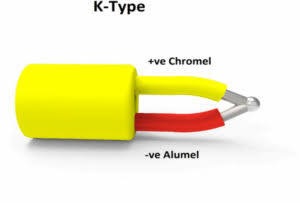
The K-type thermocouple is a widely used temperature sensor valued for its durability, affordability, and wide measurement range. It consists of two base-metal alloys, Chromel (nickel-chromium) and Alumel (nickel-aluminum), joined at one end to form a junction.
How It Works
How It Works
It operates on the Seebeck effect. A temperature difference between the measuring junction (hot end) and the reference junction (cold end) generates a small voltage. This voltage, proportional to the temperature change, is measured by a compatible meter or controller to display the temperature.
Common Applications
K-type thermocouples are “the industry standard” for high-temperature work. You will commonly find them in:
- Industrial Processes: Furnaces, kilns, and heat-treating metal.
- Engines: Measuring exhaust gas temperatures in automotive and aerospace applications.
- HVAC: Monitoring boiler and heater safety.
- Nuclear: Preferred for their relative radiation hardness
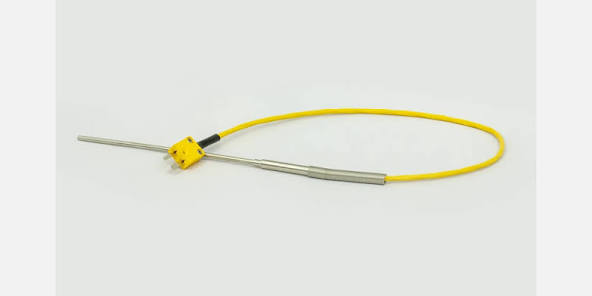
For practical temperature measurement, explore our K-type thermocouple probes and available connector options.